Key Activities
Food Price Wall Chart
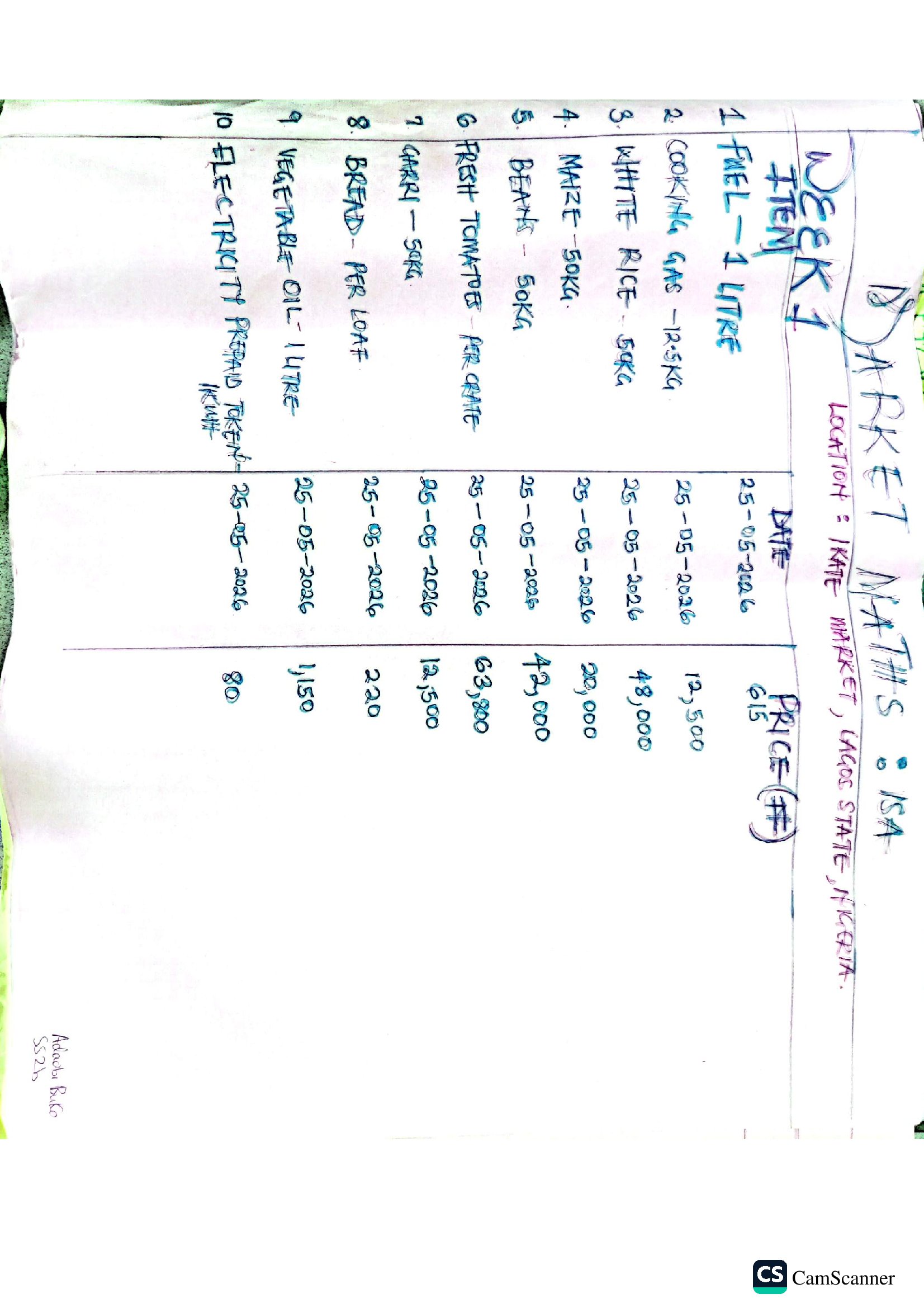
Students created and updated a classroom wall chart displaying monthly food price changes.
Research & SDGs
Learners investigated factors affecting food prices and explored SDG 2 (Zero Hunger) and SDG 8 (Decent Work & Economic Growth).
Market Interviews
Students interviewed market traders and canteen operators to understand the impact of changing food prices.
Students interviewing local market traders to understand how changing food prices affect businesses, consumers, and the local economy.
Report Writing
Learners prepared reports and reflections, sharing their findings with partner schools.
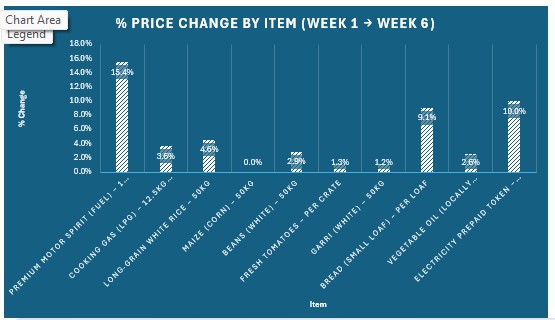
Preview of the students' Market Maths Excel Report.
Evidence Center
Browse photographs, videos, presentations and reports documenting every stage of Class Room to Chambers.

Market Maths Project Launch
Official banner introducing the Market Maths project and its learning objectives.
Market Survey
Students collected and recorded the prices of selected food items from local markets.
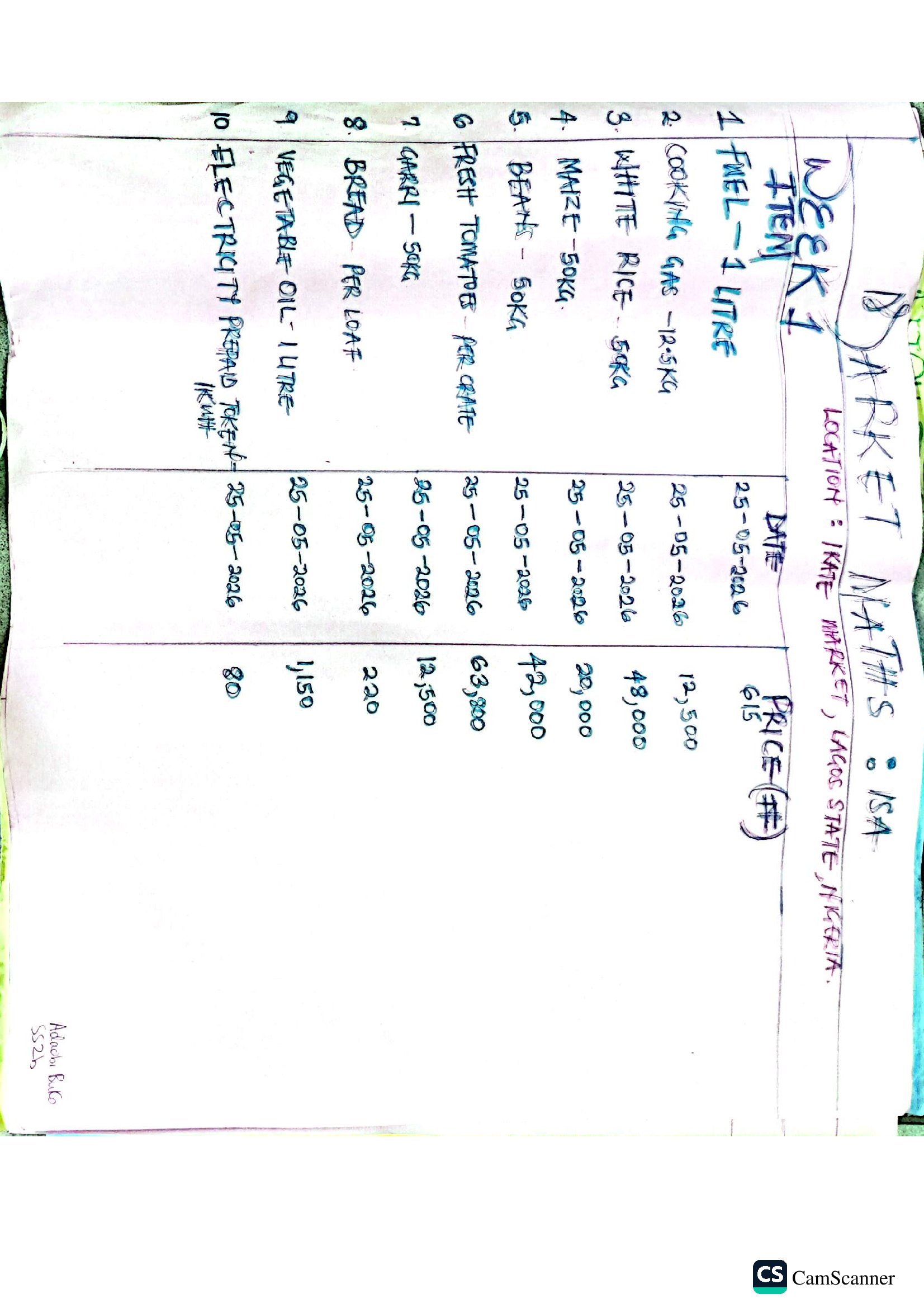
Data Recording Exercise
Learners carefully documented market prices for analysis and comparison.
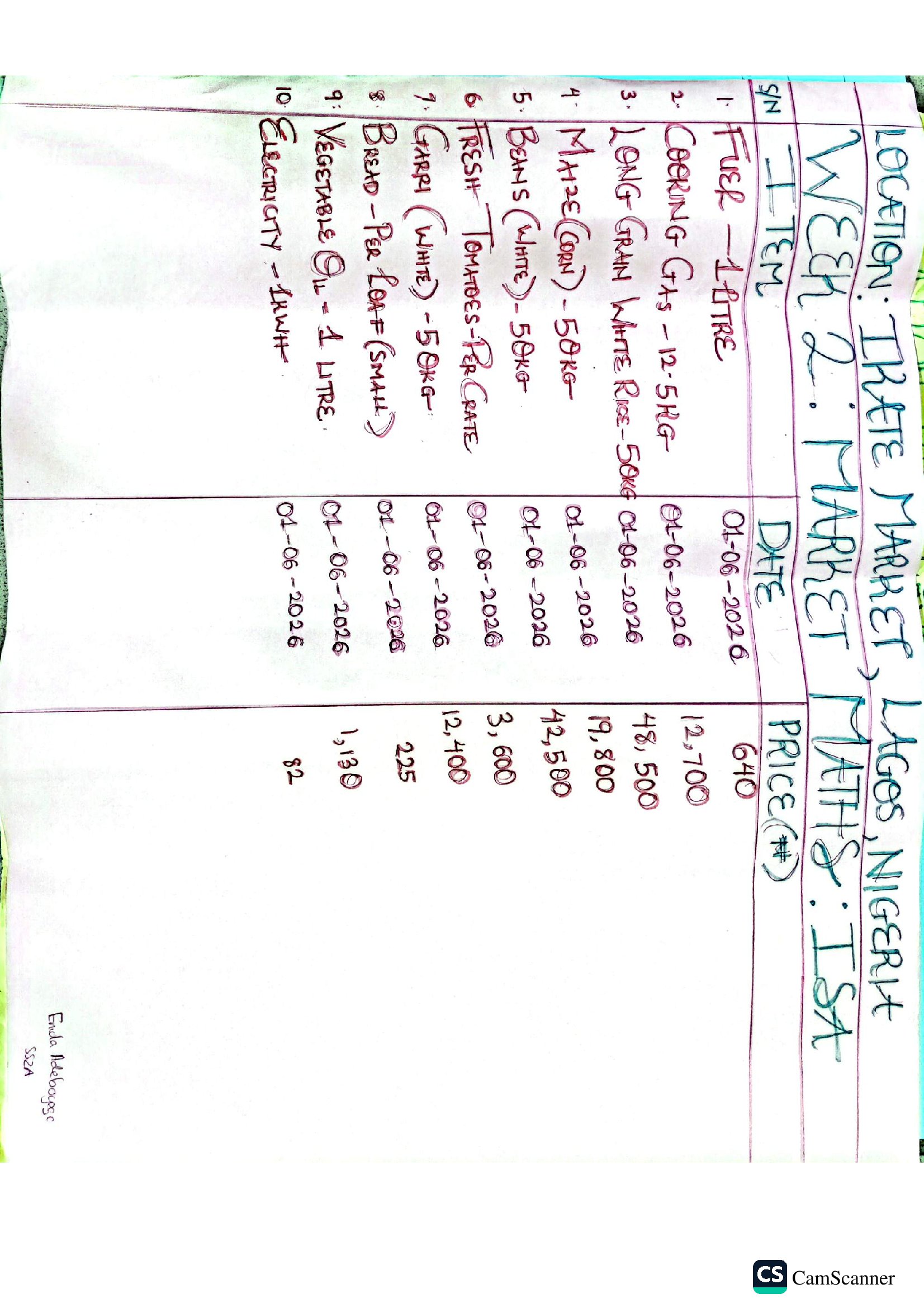
Price Analysis
Students analysed weekly price changes using mathematical calculations and graphs.
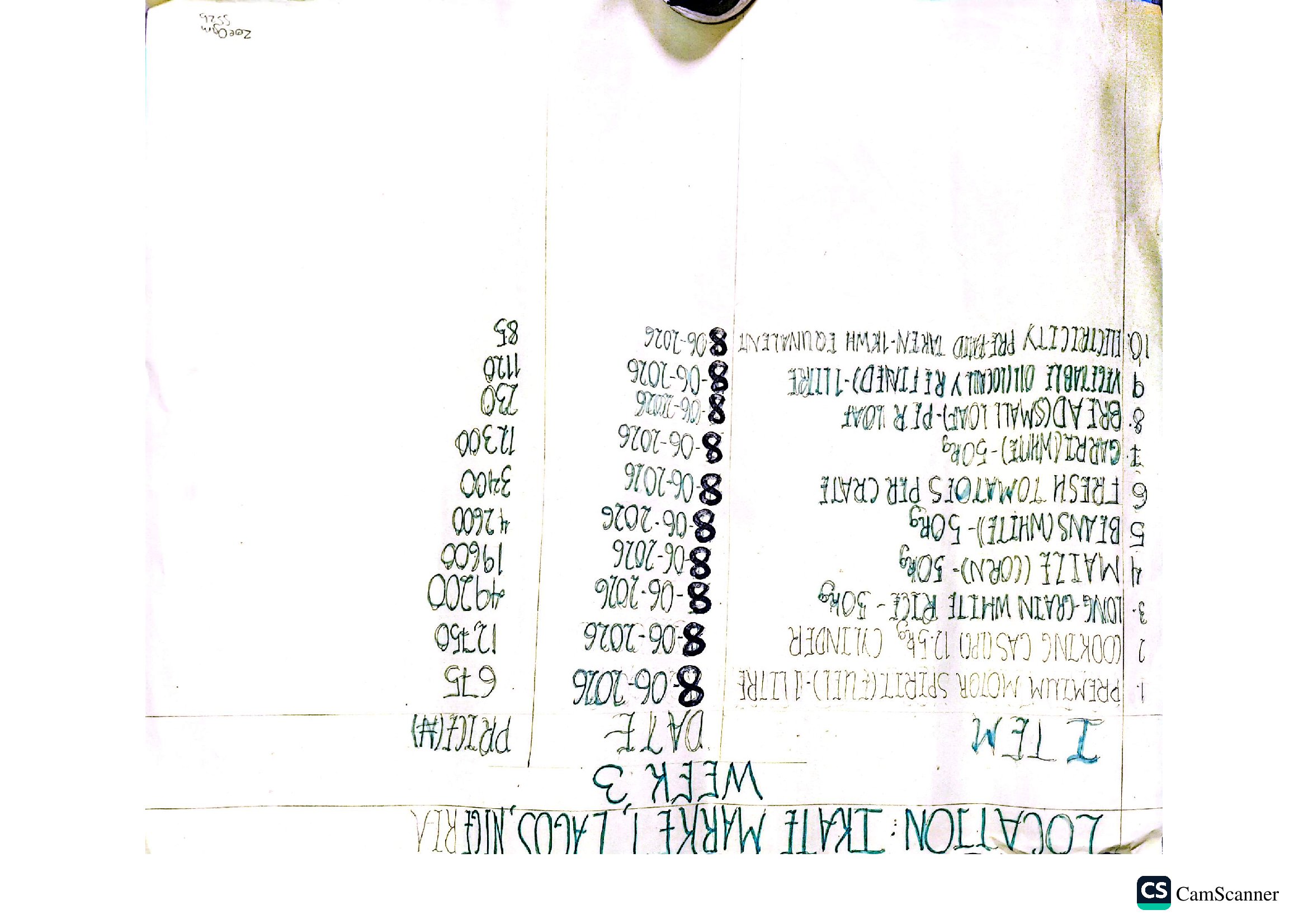
Comparing Market Trends
Learners compared market prices and identified trends affecting household food costs.
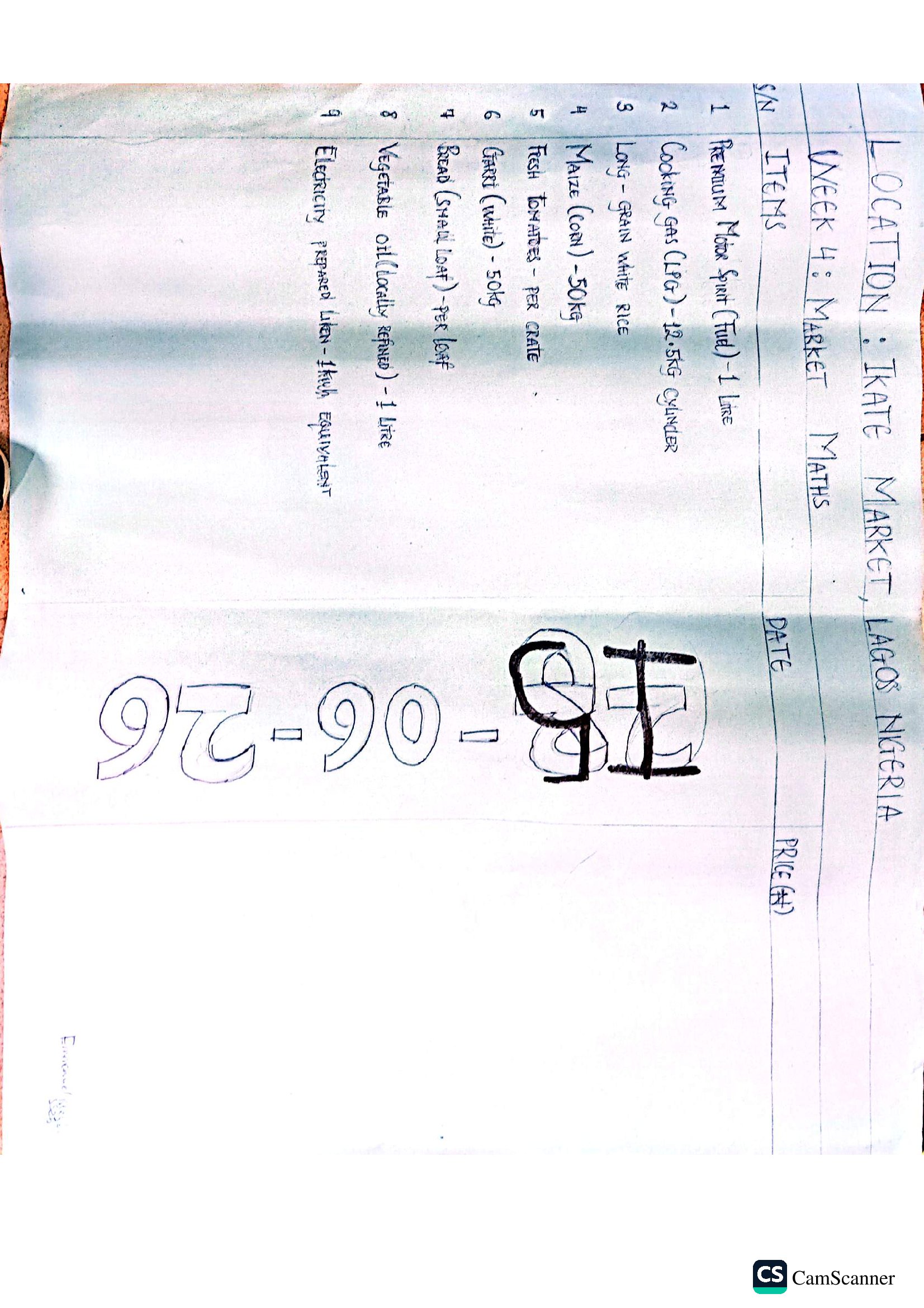
Market Investigation
Students continued their fieldwork by monitoring food price fluctuations across markets.
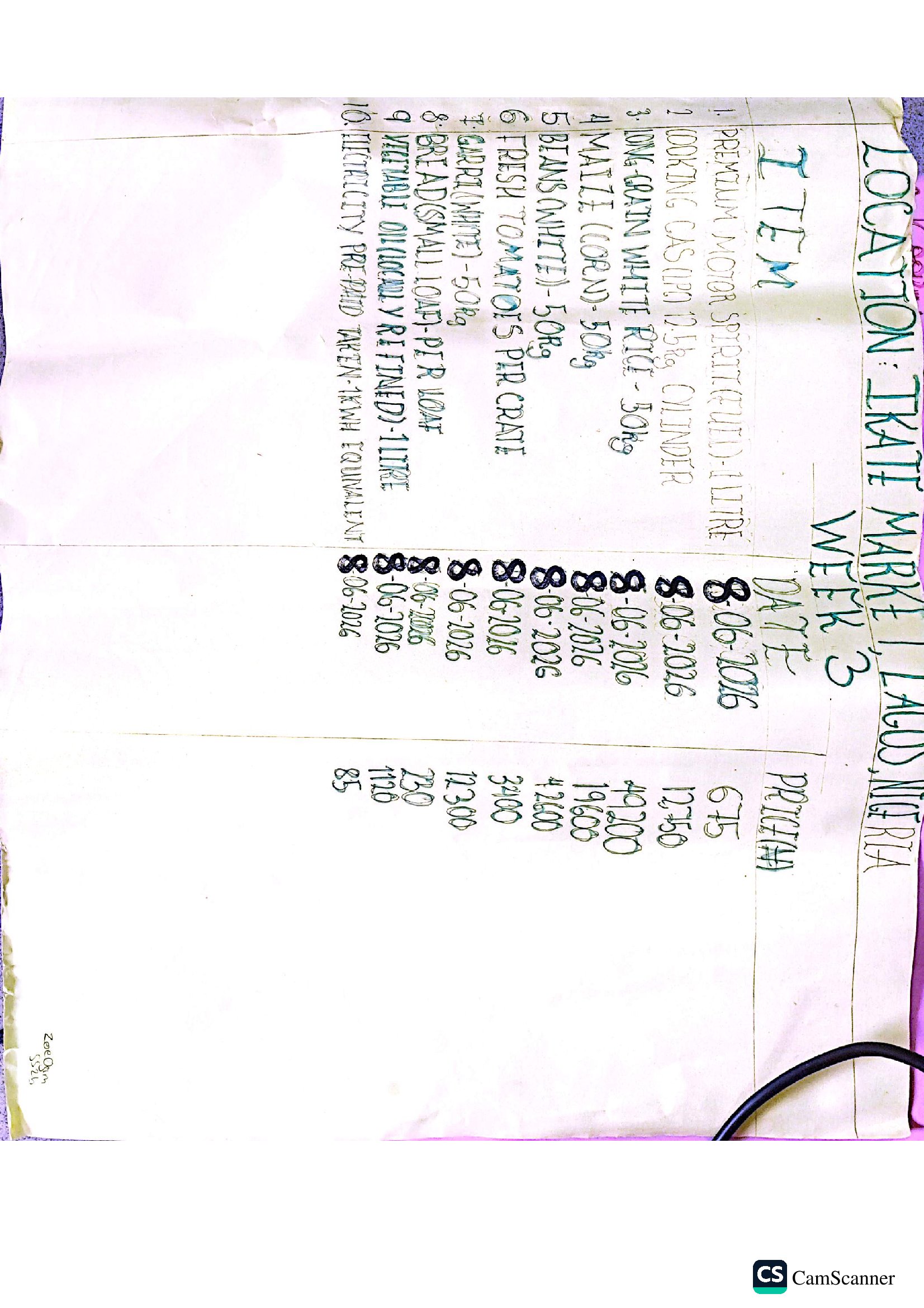
Price Comparison Activity
Students compared data collected from different markets and discussed possible causes of price differences.

Final Analysis
Final data interpretation highlighting long-term market trends and economic insights.
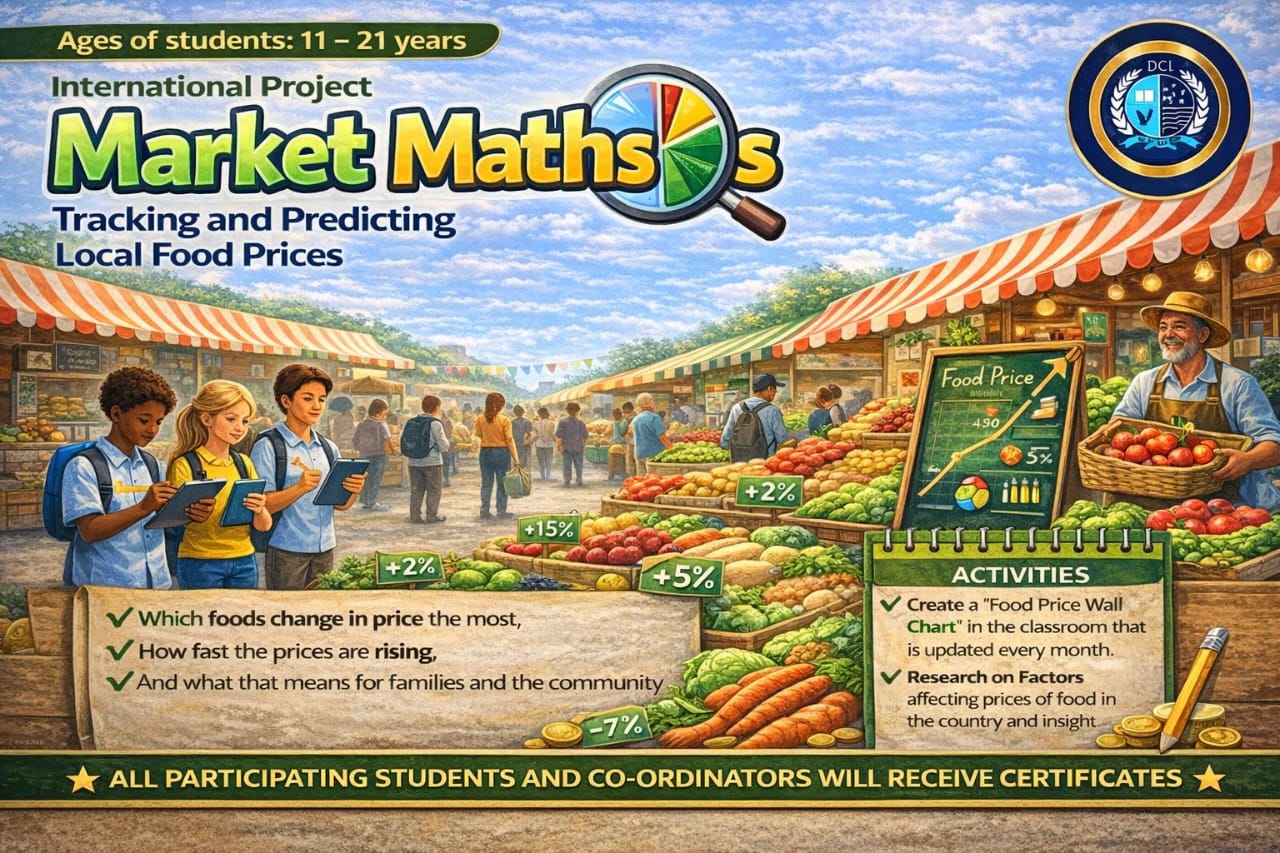
Market Maths Awareness Poster
Project poster promoting mathematical thinking through real-life market investigations.
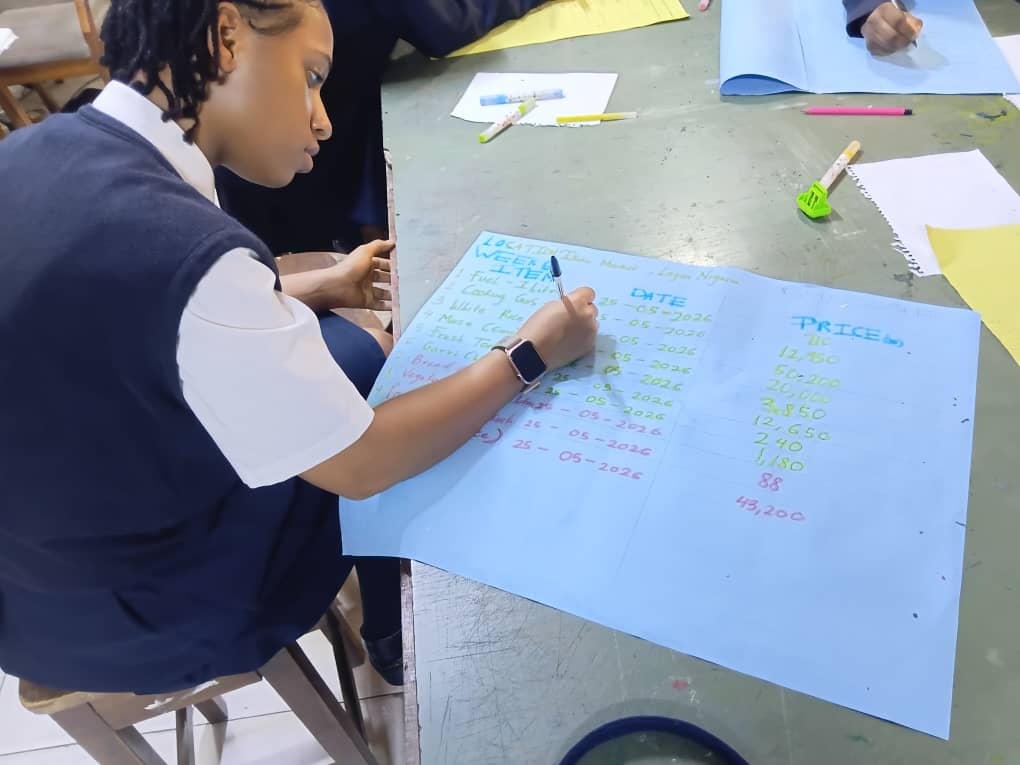
Market Price Record Sheet
Students' completed data collection sheet showing weekly prices of selected food items used for statistical analysis.